
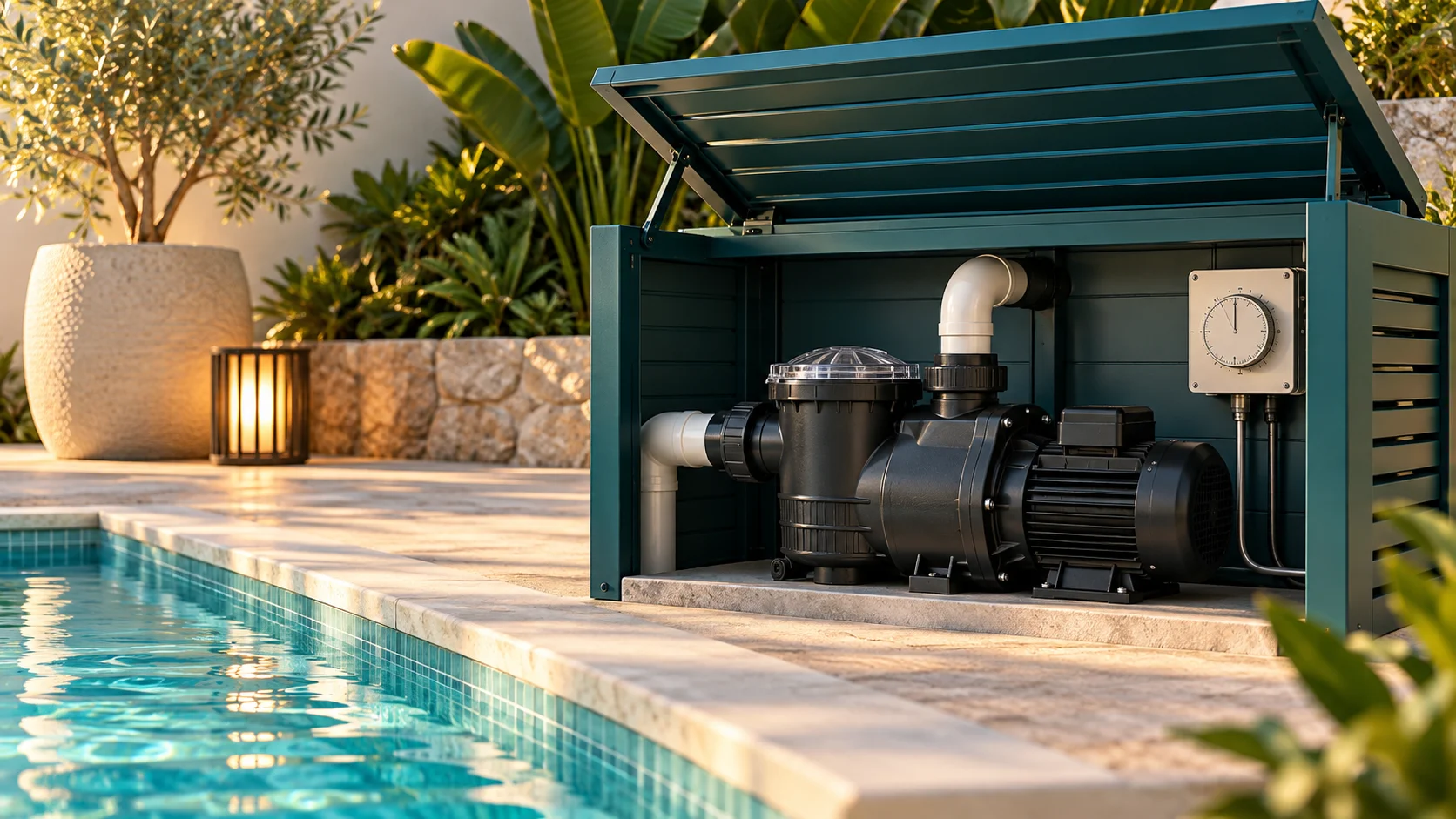
Pool-pump energy is electrical input power multiplied by operating time, with speed changes accounted for where relevant. Use measured input or the manufacturer's electrical specification, not a mechanical output figure assumed to be electrical consumption.
A schedule can make a modest load significant
An assumed 0.75 kW electrical input for six hours/day uses 4.5 kWh/day and 135 kWh over 30 days. At illustrative R3.50/kWh, the energy costs R472.50. At eight hours/day under the same input assumption, it becomes 180 kWh and R630.
The difference is 45 kWh/month, or R157.50 at that example rate. This arithmetic is not advice that every pool can reduce filtration to six hours. Water treatment, equipment, pool conditions and manufacturer guidance determine an appropriate schedule.
Use your actual input and timer
Open the appliance calculator. For a steady input, enter watts and running hours. For variable-speed operation, prefer measured daily kWh or calculate each documented operating segment before combining them.
Record the timer's actual operation, including manual overrides and days when the schedule changes. A label on a timer is not a measurement that it runs exactly those hours. If the pump shares an installation with other pool equipment, distinguish which loads your measurement includes.
Variable-speed pumps need a different comparison
Do not apply the maximum input rating to every hour of a variable-speed schedule. Record the operating settings and measure the full routine. A lower speed may require different operating time to deliver the required circulation, so compare useful operation and total kWh.
Replacing a pump needs a separate purchase-and-installation calculation. If one measured routine uses 50 kWh/month less than another, the energy saving at R3.50/kWh would be R175/month. It does not establish that any particular replacement price or advertised saving is justified.
Time of day and the tariff
On a flat energy tariff, moving the same kWh to another time does not by itself change the energy charge. A time-of-use tariff can change cost, but requires the correct time bands and schedule. The calculator does not reconstruct an hourly TOU profile.
For cumulative monthly blocks, place pump energy above the household baseline. Consult the tariff hub and use the assigned account tariff rather than a neighbouring municipality's rate.
A practical check
- Record the model, electrical input specification and current timer settings.
- Measure a representative normal operating routine using suitable equipment.
- Note other pool loads, manual overrides and unusual conditions.
- Agree any schedule or maintenance change with the appropriate pool/equipment guidance.
- Measure again under comparable conditions and retain both sets of assumptions.
Use qualified assistance for hardwired equipment or faults. Do not open electrical enclosures or improvise a temporary connection to obtain a reading. Unusual operation needs diagnosis, not a larger guessed consumption allowance.
Pool-pump questions
How many hours should every pool pump run?
This guide does not prescribe one duration for every installation. Determine the required treatment and circulation with appropriate equipment guidance, then calculate its electricity cost.
Can a pump rival other household loads?
It can when its measured input and operating hours make the monthly kWh large. Use the household budget to compare actual loads.
Method reference: Eskom energy guidance, reviewed 1 November 2026. Examples state their assumed power, hours and rate.