
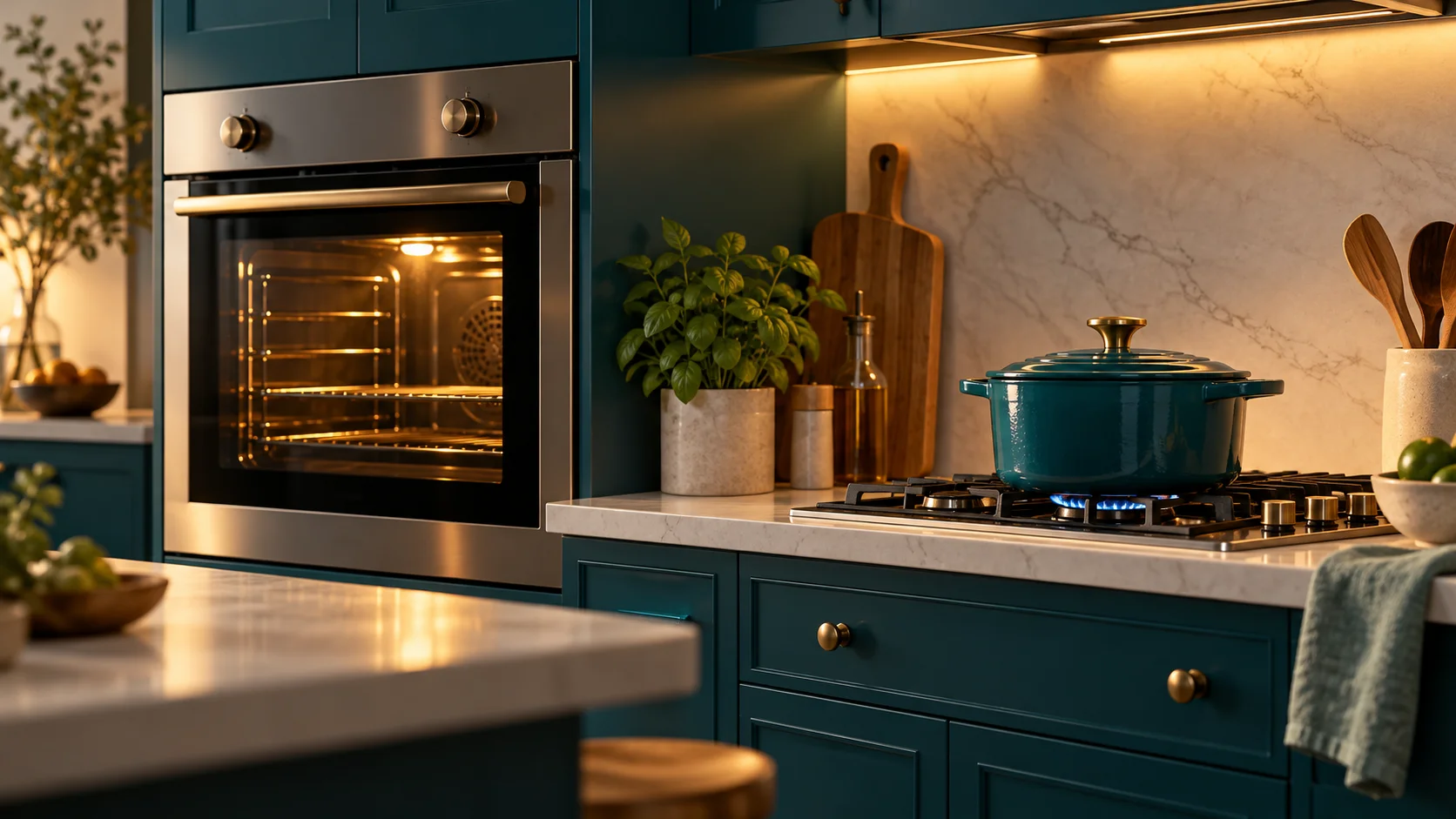
Add the electrical energy used by the hob, oven and any other appliance involved in the meal. A label's maximum connected load is not necessarily the draw throughout a cooking session. Thermostats and power settings change operation.
Work through one cooking session
Suppose an oven averages 1.5 kW electrical input over a one-hour session, while one hob averages 1 kW for half an hour. Total energy is 1.5 + 0.5 = 2 kWh. At illustrative R3.50/kWh the session costs R7. Over 20 identical sessions it would be 40 kWh and R140.
These average inputs are assumptions. A full-power element rating multiplied by wall-clock time can overstate thermostatically controlled use. Conversely, ignoring a second hob or preheat period understates the meal's total.
Use the calculator for each load
The appliance calculator accepts watts and equivalent full-power hours, or measured daily kWh. Calculate components separately and add them, or use a measured complete cooking session. Do not count both approaches for the same electricity.
For a block tariff, place the combined energy above the household's other monthly use. Giving the oven and each hob a separate cheap first block would understate the extra cost. Fixed account charges are separate from the meal's energy.
Measure a comparable cooking task
Record preheating, cooking and any keep-warm period. Compare the same quantity of food and a comparable finished result. A microwave, air fryer, pressure cooker and oven can have different capacities and run times; watts alone do not settle the comparison.
Use suitable measurement for high-current or hardwired cooking equipment. A whole-house reading during cooking also includes refrigeration, hot water and other loads. Record those conditions rather than assigning the full difference to the oven.
Changes worth measuring
Plan cooking sessions, use cookware suited to the hob and follow the appliance's instructions. Batch cooking can change total energy per serving, but reheating and storage also affect the full task. Measure before promising a fixed percentage saving.
Compare preheat times and unnecessary keep-warm periods while preserving the cooking outcome. A shorter process that does not cook food appropriately is not an equivalent comparison. Do not change electrical connections or bypass appliance controls to run a test.
Turn sessions into a monthly budget
Multiply measured kWh per session by the number of similar sessions. Keep weekday meals, weekend baking and occasional long cooking tasks separate if they differ materially. This gives a clearer budget than declaring that every household uses a fixed daily quantity for cooking.
Compare the budget with the whole-house reconciliation and apply the current energy tariff. If you use a non-electric fuel, compare the full useful task with that fuel's own measured cost rather than treating gas heat input as electrical watts.
Cooking electricity questions
Does a 3 kW oven always use 3 units per hour?
That follows only if it draws 3 kW continuously for the whole hour. Thermostatic operation and selected modes can change average draw.
Is an air fryer always cheaper?
Compare the same meal, quantity and result using measured kWh. A universal saving is not assumed.
Method references: energy-efficiency guidance and Eskom household guidance. Reviewed 1 November 2026. Examples are explicit scenarios.