
You bought R500 of electricity at the beginning of the month and got a decent number of units. You bought another R500 on the 25th and got a lot less. Nothing is broken, nobody stole from you, and the vendor you used makes almost no difference. Here is exactly what is happening, what changed in 2026, and how to time your purchases so you stop overpaying.
The short answer
Three things decide how many units (kWh) you get for your rand:
- Your tariff structure. Most municipalities use inclining block tariffs. The more you buy in a calendar month, the more expensive each additional unit gets. The counter resets on the 1st.
- The 2026 price increases. Eskom direct customers pay 8.76% more since 1 April 2026. Municipal customers pay roughly 9.01% more since 1 July 2026, because municipal financial years start in July.
- VAT and fixed charges. 15% VAT comes off every purchase before a single unit is allocated, and some tariffs deduct daily service charges from your purchase too.
The day of the month you buy on does not change the price per unit. What matters is how much you have already bought that month.
Block tariffs: the step ladder that eats your units
If your electricity comes from a municipality (City Power in Johannesburg, Tshwane, Ekurhuleni, Cape Town and most others), you are almost certainly on an inclining block tariff, often shortened to IBT.
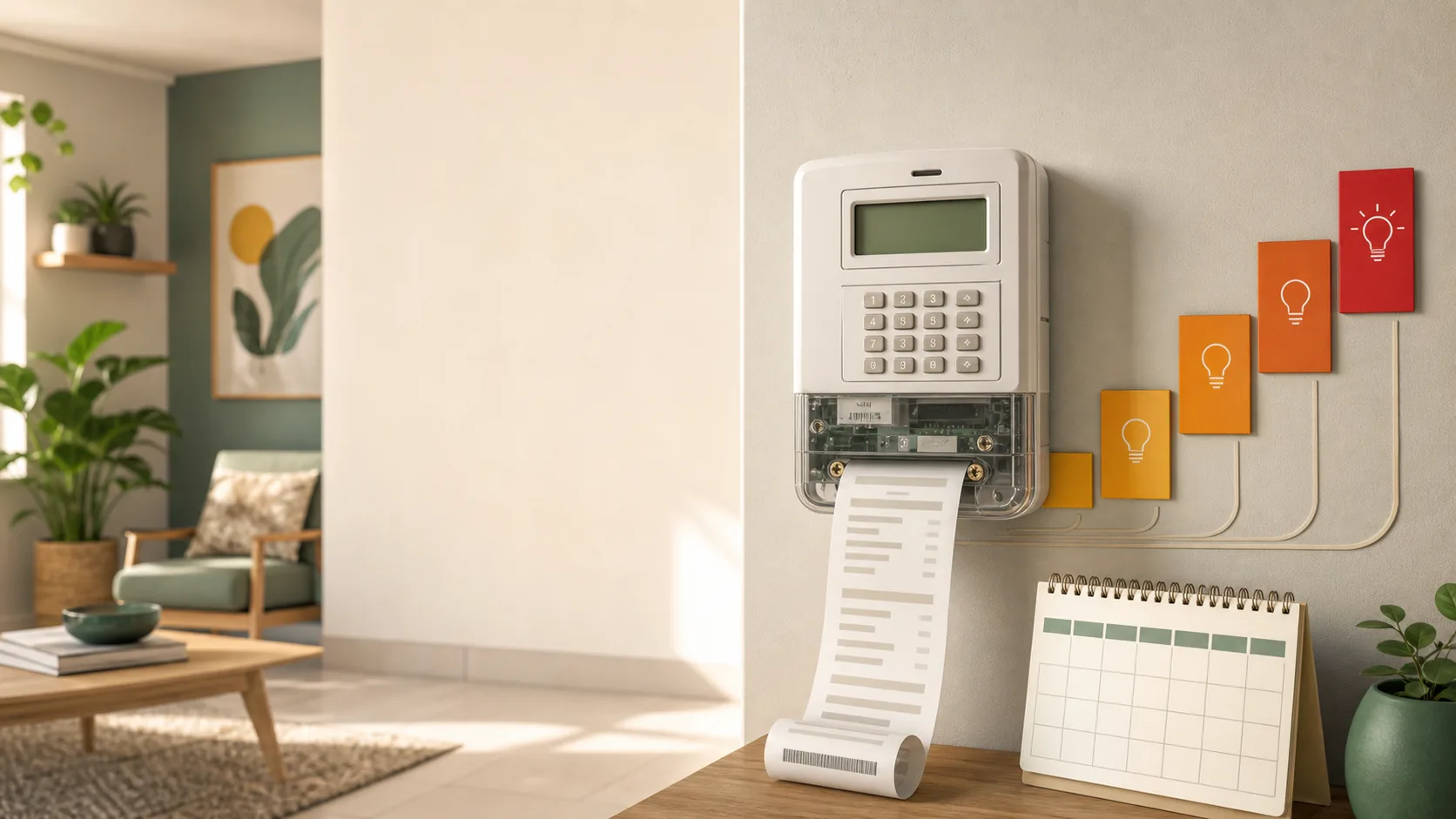
It works like a step ladder. The municipality keeps a running total of the units you buy each calendar month:
- The first block of units is sold at the cheapest rate.
- Cross the threshold and every unit after that costs more.
- Cross the next threshold and the rate climbs again.
The running total resets to zero on the 1st of every month. That is the whole mystery. R500 spent on the 2nd lands in the cheap block. The same R500 spent on the 25th, after a month of geysers and kettles, lands in an expensive block. Same money, fewer units.
To give you a sense of the top end: on Cape Town's Domestic tariff, consumption above 600 kWh in a month is charged at 493.90 c/kWh including VAT for 2026/27. That is nearly R5 per unit once you are in the top block.
Important 2026 exception: Eskom direct customers
If you buy directly from Eskom (common in smaller towns, rural areas and some townships), block tariffs no longer apply to you. Eskom removed the inclining block structure from its Homelight tariffs, so residential Eskom direct customers now pay the same rate per unit regardless of how much they buy in a month.
How to tell which one you are: if your token slips or municipal account mention City Power, City of Tshwane, City of Cape Town or another municipality, you are a municipal customer and blocks almost certainly still apply. If your supply agreement is with Eskom itself, you are on a flat rate.
What the July 2026 increase did to your units
Two increases landed in 2026, which is why this year feels worse than usual:
- 1 April 2026: Eskom direct tariffs went up 8.76%.
- 1 July 2026: the NERSA guideline increase of about 9.01% flowed through to municipal customers.
For prepaid users the increase does not show up as a bigger bill. It shows up as fewer units. R1,000 of prepaid electricity now buys roughly R90 less electricity than it did in June, which works out to around 30 fewer units depending on your tariff. Across the major metros, a unit of domestic electricity now sits somewhere between R3.70 and R4.50 once the new municipal increases are applied.
So if your units dropped noticeably in July even though your usage did not change, that is the tariff increase, not a meter problem.
Where the rest of your money goes
Your token slip is not just units multiplied by a rate. Before any units are allocated:
- VAT at 15% is deducted from the full purchase amount.
- Fixed or daily service charges are deducted on some tariffs. Cape Town's Domestic tariff, for example, recovers a service charge of about R2.46 per day through the vending system since your last purchase.
- Municipal debt recovery can also come off the top if you owe your municipality money for rates or water. Some municipalities deduct a percentage of every electricity purchase against arrears.
This is why two neighbours can pay R100 at the same shop and receive different units. Different tariffs, different consumption so far that month, and sometimes different deductions.
How to get the most units for your money
The good news: on a block tariff, the fix is a buying pattern, not a bigger budget.
1. Buy your cheap block every single month. Unused cheap units do not carry over. If you skip a month, that month's cheap block is gone forever and your catch-up purchase lands in the expensive blocks.
2. Stop bulk buying months in advance. Buying three months of electricity in one go pushes most of those units into the top block. Buying the same total split across three months keeps most of it in the cheap blocks. Bulk buying prepaid electricity is more expensive, not cheaper.
3. Know your threshold. Compare a token slip from early in the month with one from late in the month. The rand-per-kWh difference tells you when you crossed a block. Once you know roughly where your household crosses, you can plan around it.
4. Spread big purchases across month boundaries. If you need a lot of electricity and it is the 28th, buying half now and half on the 1st can land the second half in the new month's cheap block.
5. Automate it so you never miss the cheap block. The most common way people lose money is simply forgetting to buy early in the month, then panic buying at month end in the top block. A scheduled recurring electricity purchase that runs in the first days of every month locks in your cheap units without you thinking about it.
Does it matter where you buy?
Less than people think. The price per unit is set by your municipality or Eskom, not by the shop, app or bank you buy through. Switching vendors does not change your tariff.
What does differ between vendors is fees and convenience. Some platforms charge service fees per transaction, which quietly reduces your units. SIMcloud charges no monthly fees, keeps every token in your Electricity History so you never lose one, and lets you schedule purchases for the start of the month when your units are cheapest. You can check whether your meter is supported before spending a cent.
If you manage electricity for more than one property, a rental portfolio or staff households, the same logic applies at scale: buy every meter's cheap block early in the month, in one batch, using a CSV upload.
FAQ
Is electricity cheaper at the beginning of the month?
The rate table does not change, but your position on it does. On block tariffs the monthly counter resets on the 1st, so purchases early in the month usually fall in the cheapest block. In that practical sense, yes, the same R500 buys more units early in the month.
Is it cheaper to buy electricity in bulk?
No. On a block tariff, bulk buying pushes most of your units into the most expensive block and you forfeit the cheap blocks of the months you skip. Buy monthly instead.
How many units do I get for R500?
It depends on your municipality, your tariff and how much you have already bought that month. As of July 2026, metro rates range from roughly R3.70 to R4.50 per unit, so R500 buys somewhere around 110 to 135 units if you are in a low block, and considerably less in a top block. Your token slip shows the exact rate applied.
Why did my units suddenly drop in July 2026?
Municipal tariffs increased by around 9.01% on 1 July 2026. Prepaid users see the increase as fewer units for the same money rather than a bigger bill.
Does load shedding or the time of day affect prepaid units?
No. Residential prepaid tariffs are not time-of-use tariffs. Buying at night or during load shedding makes no difference to the rate.
Do unused units expire?
Units already on your meter do not expire. What expires is each month's allocation of cheap-block pricing, which resets on the 1st whether you used it or not.
Prices referenced: Eskom Schedule of Standard Prices 2026/27, City of Cape Town residential tariff guide 2026/27, NERSA municipal guideline increase 2026. Tariffs differ by municipality. Check your own token slip or municipal tariff book for exact rates.
Ready to stop overpaying? Create a free SIMcloud account, check your meter, and set up a recurring purchase for the first week of every month. No monthly fees.